

I’ll be honest with you. On a busy Monday with 200 applications sitting in the inbox, I don’t read your CV. Not at first, anyway. I skim it.
You’ve probably heard the stat that recruiters spend about six or seven seconds on a CV before deciding whether to keep going. People argue about the exact number, but from where I sit it feels about right. Those first few seconds aren’t about judging you as a person. They’re about one question: is this worth a proper read?
So here’s what actually happens in that window, and what you can do about it.
Where my eyes actually go
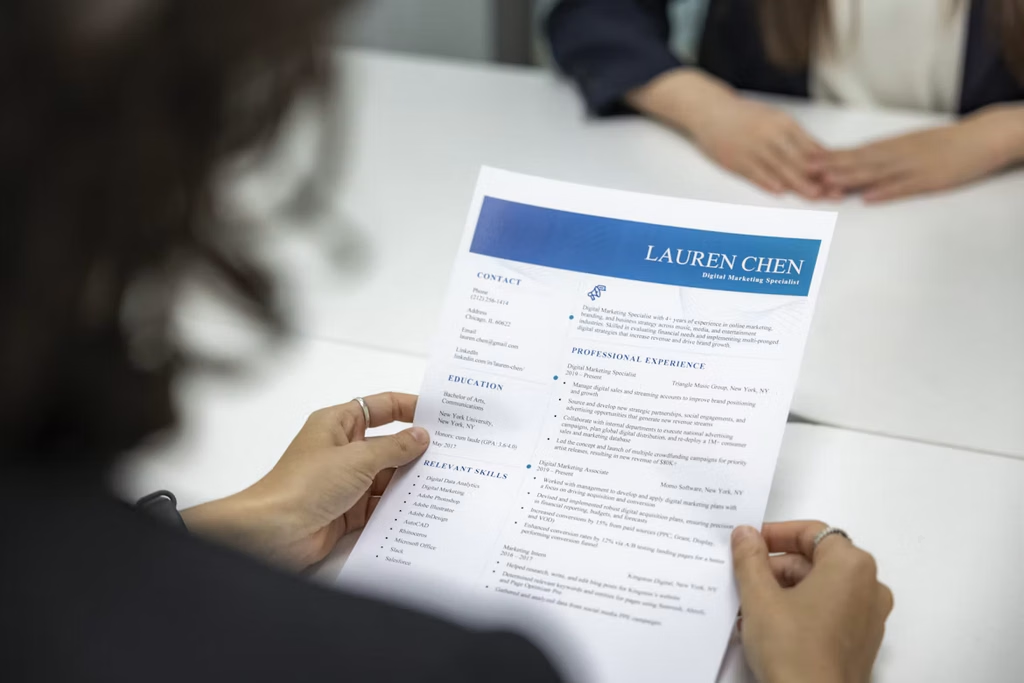
It’s not top to bottom, left to right like a novel. It’s more of a zig-zag down the left side of the page, picking up a handful of things:
- Your current or most recent job title. This is the first thing I look for. Does it roughly match the role I’m hiring for?
- Where you work now. Company name, and whether I’ve heard of it or can figure out what it does.
- How long you’ve been there. Dates tell me a lot. Steady progression, job hopping, a gap. I’m not judging yet, just noticing.
- The job before that. Same three checks, quickly.
- Anything that jumps out. A number, a qualification I asked for, a skill in bold. Or a big block of text that makes me sigh.
That’s it. That’s the seven seconds. Notice what’s not on the list: your objective statement, your hobbies, and the paragraph about being a “hard-working team player”. I’ll get to those later, if I get to them at all.
What makes me keep reading
The CVs that get a proper read usually make my job easy. They answer my questions before I’ve finished asking them.
A clear match in the first third of the page. If I’m hiring a payroll officer and your top line says “Payroll Officer, 4 years”, you’ve already won the first round. If it says “Finance Professional” I have to go hunting, and I might not bother.
Results, not duties. “Responsible for managing accounts” tells me what the job ad said. “Looked after 40 client accounts and kept 95% of them over two years” tells me what you actually did. One number is worth a whole paragraph of adjectives.
White space. It sounds silly, but a CV that breathes is easier to scan. Short bullet points, consistent dates, headings I can find. I’m not marking you on design, I just need to find things fast.
A bit of tailoring. I can tell when a CV has been sent to 80 jobs unchanged. I can also tell when someone has swapped in the keywords from my ad and moved their most relevant experience to the top. Guess which one I call.
What makes me stop

I don’t love admitting this, but small things can end a read early.
Walls of text. If your first job is described in one dense paragraph, I’m scanning past it. Not because it’s bad, but because I can’t find the good bit.
Mystery dates. “2021 to present” is fine. No dates at all makes me wonder what you’re hiding, even if you’re hiding nothing.
A three-page CV for a junior role. Two pages is plenty for most people. One is fine if you’re early in your career. Longer than that and it starts to feel like you couldn’t decide what mattered.
Typos in the top half. One typo on page two, I’ll probably miss it. A spelling mistake in your own job title is harder to ignore, especially if the role asks for attention to detail.
Fancy templates that fight me. Columns, icons, skill bars with little stars. They look nice in a template gallery. In real life they often scramble when our system reads them, and five stars for “Communication” doesn’t tell me anything.
Five things to fix before you hit send
If you only have ten minutes, do these:
- Put your most relevant job title near the top, worded the way the ad words it (as long as it’s true).
- Turn at least two duties into results with a number attached.
- Cut every bullet point to two lines or less.
- Check every job has a start and end month and year.
- Print it, or open it on your phone, and give it the seven-second test yourself. What did you notice first?
That last one is my favourite. If the thing you notice first isn’t the thing you want me to notice, move it.
https://successrec.co.nz/job_seekers/
One last thing

Seven seconds sounds brutal, I know. But it cuts both ways. You don’t need a perfect CV. You need one that makes the right first impression, fast, so a real person sits down and reads the rest.
And once I’m reading properly? That’s where your experience gets to do the talking.
If you’ve got a CV you’re not sure about, flick it through the seven-second test tonight. I’d love to hear what you changed.
https://successrec.co.nz/cv-support/

